The Ausgleich

Much had been written about the Ausgleich of 1867 between Austria and Hungary: did it contribute to the dissolution of the Habsburg Empire in 1918; did it emasculate politically Franz Josef; was it inherently unfair to the other nationalities within Austria-Hungary? While there may be an element of truth in all of these statements it cannot be denied that it saved the Empire from an early death after the defeat of Austria by the Prussians at the battle of Königgrätz and ultimately saved Franz Josef from the ignominious fate of having ruled over his “Empire” for only nineteen years.

But what of the charge that the Ausgleich was an arrangement that came about only because of Hungarian hubris? Why did Franz Josef defer to the Hungarians and agree to the terms of the Ausgleich? Was it merely the possibility that the upper-class Magyars would choose to sympathise with the advancing Prussians that made the absolutist monarch accept the compromise? Or were there other existing and more pragmatic reasons?
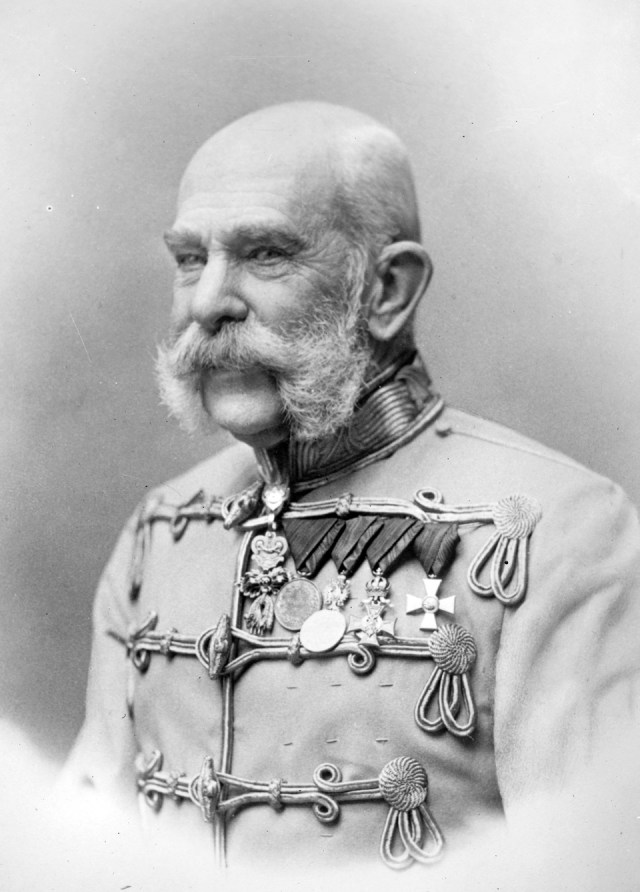
Emperor_Francis_Joseph

In 1848 the Magyars were the dominant political and economic group in Transleithania (Szent István Koronájának Országai – Lands of the Crown of Saint Stephen). They owned around 90% of the productive agricultural and forestry land which they developed, investing heavily in terms of time and money. The abolition of serfdom in 1848 by Franz Josef had been something of a poisoned chalice for the ‘peasant bourgeoisie’ as there was little or no land with which to start an enterprise and many were saved from destitution by gaining employment as workers on the land on which they had been serfs. This allowed them not only to earn but to remain within their own families and communities rather than be forced from the land. Franz Josef’s abolition decree had made no provision for the freed serfs. The Magyars also invested their wealth in industrial upgrades across Transleithania: by the time of the Ausgleich, the land was already criss-crossed with railways the money for which had come from Magyar landowners rather than Franz Josef. Steel and coal production were improved and the first telegraph systems started to appear connecting towns and cities across Transleithania. Investment in new agricultural practices and industrialisation were more advanced in Transleithania than its western counterpart.

With an Austrian economy buckling under the cost of defeat by the Prussians Franz Josef needed a political and economic miracle; he received it with the signing of the Ausgleich.

The establishment of the two autonomous economies meant that Austria and Hungary could officially trade with each other, with separate fiscal policies. This created an income to the Hungarian government which allowed for a reduction in taxes and a freeing up of income which could be invested and thus further strengthen the Hungarian economy. The Austrian economy, which was flagging by contrast, due to a lack of investment, was helped by the Hungarian parliament on several occasions when it helped to pay off the Austrian governments debts.

The Ausgleich may have had it flaws, most notably in ignoring many of the other people of the Empire, but while it was shaped by Magyar pride and ambition it was all too readily accepted by an embattled emperor. It has been said that had Austria not been defeated by the Prussians the Ausgleich would never have been signed. It could equally be argued that had Franz Josef managed the economy of Cisleithania better the Ausgleich would have been a very different compromise.

——————–oOo——————————
Posted in Uncategorized | Leave a comment

The fantasy of the Kaiserin Sissi

The image of the beautiful Kaiserin Sissi of Austria-Hungary is ubiquitous across Austria, and especially Vienna. She is seen as a reminder of the romantic past of Austria, a past of beauty, elegance and “the real Austria”. However this is an image at odds with the reality of her life.

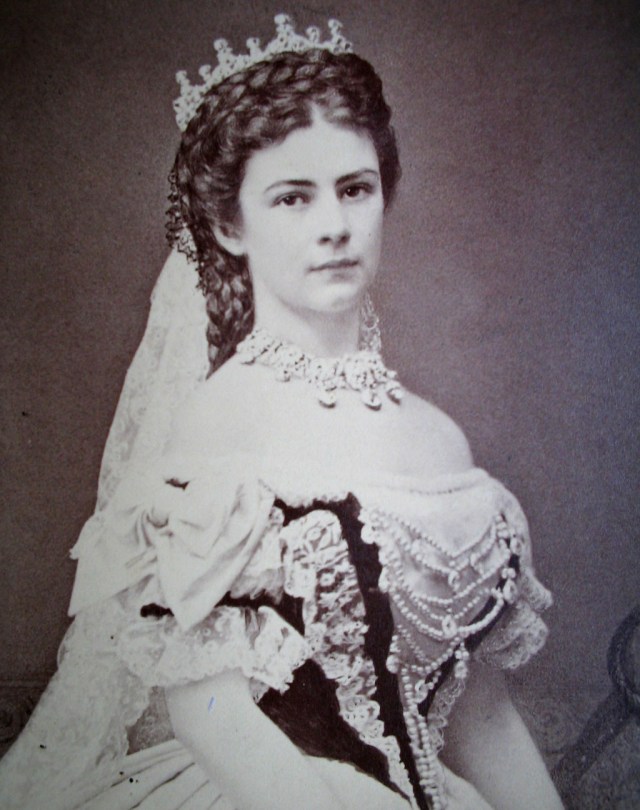
Elisabeth-Österreich-1867

Elisabeth (Sissi) Wittelsbach became the sixteen year old wife of Emperor Franz Joseph of Austria-Hungary in 1854. Sissi, who had been brought up in the, relatively, impoverished and informal atmosphere of Possenhofen castle found life in the Viennese court oppressive with its insistence on strict protocol. Her husband, the Emperor Franz Josef brought up in the atmosphere of Habsburg adherence to duty, was a workaholic in thrall to his mother, Duchess Sophie, who actively disapproved of Sissi, who was her niece. The birth of three children in quick succession did little to help the situation as Sophie took on much of the responsibility and authority for the care of the children. Sissi withdrew into herself, travelled abroad frequently, claiming illness, and seldom appeared in public. This did little to endear her to the ordinary people of Austria and isolated her from the aristocracy at court. She found refuge in the countryside of Hungary where the people found her to be their “champion”, further alienating her from Austrians.

So why should Sissi have become the symbol of the glorious past of Austria? In 1954, when the new Austrian Republic appeared they had, as all new countries do, to find a creation myth. But because Austria was more an old country reinventing itself, rather than a newly created one, they were burdened by their recent past. The ease with which the Anschluss occurred had exposed the levels of Austrian anti-semitism. This was not a country which had Nazism imposed upon it, rather it was a country readily receptive to such ideas. By the 1950s when Austria was reinventing itself it found an anchor in the past of the late nineteenth century. The music of Strauss, the glamour of the last Habsburg court, even the romantic tragedy of the deaths at Mayerling were preferable to the reality of the recent past. This was, in part aided by the Austrian State Treaty of 1955 which forbade any union between Germany and Austria. Set free from any relationship with Germany Austria could thus move forward by looking back. The previous years could be set aside as a temporary aberration. Those on the left in Austria, keen to explore the fascism of the previous years, were faced with a denial swathed in a sea of ballgowns and a truth drowned out by the waltz of the Blue Danube. The nascent tourism industry took off, aided by a world weary of war and looking for fantasy and diversion. Sissi with her undoubted beauty provided that fantasy. The film industry joined in with several films about the “true Austria” culminating in Ernst Marischka’s Sissi trilogy: Sissi (1955), Sissi: Die Junge Kaiserin (1957), and Sissi: Schicksaljahre einer Kaiserin (1957). Highly popular the films embedded the romantic fantasy of the beautiful Kaiserin Sissi into the Austrian conscience. A place which she retains to this day.

Posted in Uncategorized | Leave a comment

The birth of Weimar Kabarett

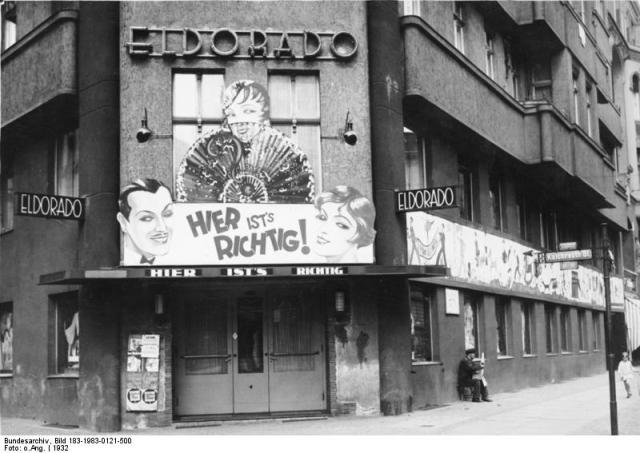
Berlin, Bar "Eldorado"

The Weimar Republic came into being in confusion and fear. It was born of a war that had killed and maimed millions and wrought destruction across a large part of Germany and the rest of Europe and elsewhere. The Republic brought with it the remnants of the Wilhelmian era, the shame and anger of the dictated peace and the shattered hopes and dreams of the German people on the right and left of the political spectrum. The trauma of the war and its abrupt and unexpected end threw all of Germany into confusion. The German people had to contend with an unexpected military defeat and the abdication of the Kaiser which raised questions over the reason for the war.
Although fighting had stopped on the Western Front on the 11th November it continued and indeed intensified on the streets of many German cities most notably Berlin. In October 1918 the sailors at the Kiel Naval base mutinied. Homecoming soldiers returned to a confused public led by brawling politicians. On November 8th Kurt Eisner, an independent socialist, proclaimed a republic in Bavaria. On November 9th Philipp Scheidemann of the Social Democrats proclaimed a republic in Weimar. The Weimar Republic survived; the Bavarian did not. But within days of the proclamation of the new Republic left and right wing factions were on the streets fighting. On the 26th November Eisner called on the workers’ and soldiers’ council of Berlin to overthrow the interim government. It was not an auspicious start.
The interim government had to run a country that was recovering from war and negotiate peace terms with the Allies, while faced with attacks from left and right. The government was viewed with wary suspicion by the Allies and with angry resentment by the remains of the Austro-Hungarian Empire. It received no international help in rebuilding the shattered country. The government was thought to be too revolutionary for the conservatives; it was also viewed as not radical enough for the communists. Attempting to deal with practical issues such as that of returning soldiers and the economy the government was constantly undermined by both left and right seeking their own interests over other considerations. By December 1918 parades for returning soldiers were interspersed with demonstrations by Spartacists. Government troops fought the communists using heavy machine guns.
This difficult birth presaged the subsequent development of the Republic. There was never any time, to resolve any of the underlying issues in the country before another crisis hit. The reparations demanded by the Allies put an immense strain on the country’s economy as did the French occupation of the Ruhr and the blockade of German ports. Returning soldiers faced unemployment and financial hardship. Right and left argued over blame and disagreed about solutions and many gave way to extremes on both sides. Successive governments attempted to steer a middle course but with a definite and growing rightwing bias. By the early twenties things had somewhat settled. The government was led by the conservatives but with a greater level of control. Political violence lessened although it did not disappear. The French evacuated from the Ruhr allowing German industry to get moving and the economy strengthened. The Treaty of Locarno was signed with Great Britain, France, Italy and Belgium and Germany was no longer a pariah state. However, these economic and social improvements, although very welcome, did not mean prosperity for all. Germany had, after all, to recover from extreme conditions. More importantly, nothing had been done to deal with the underlying problems in Germany which, when the world economy crashed in 1929, caused the extreme political elements to come to the fore.
These underlying problems had been developing since the beginning of the century. While the 20th century heralded the modern era of the machine most of German society still hankered after the time of heroes. Romanticism and the love of Germanic legend still held true. Germans felt themselves to be under threat from the machine that separated them from the land and from their inner soul. And this was underpinned by the German obsession with death. The fixation on mortality was understandable given the losses in the Great War; Germany had lost around 2 million soldiers with a further ¾ million civilians dying from disease and malnutrition. But the nihilistic philosophy of Nietzsche and his assertion that modern man had killed God also contributed and created an ethos where death, its meaning and its purpose became all pervasive. Discussions were held in cafes and bars as the population watched injured soldiers return to a heroes’ welcome. Life was becoming unreal. Parades in Berlin treated the returning soldiers as if they had won the war. The Dolchstoβlegende (stab-in-the-back) legend was born blaming Jews, communists and women for the disgraceful end to the war. The politicians argued over how to organise the economy while war wounded were on the streets begging for food. The German had lost his way; the machine had fragmented his life and left him with a shattered soul and the only reality that was true was death.
This ethos did not exist in a vacuum and built on the cultural changes that had been happening in Germany since the turn of the century. Feelings of restlessness had led many to welcome Germany’s military build-up and the start of the war when it came. The world was changing and new ideas in science, philosophy and the arts flourished. Germany embraced and was the instigator of many of these new ideas but was still ruled by an elite that saw no need for societal change. Anti-Semitism was rampant in the universities, the military were held in high esteem and German Kultur was praised for its purity and lack of contamination by western values. This tension between the values of the conservative bourgeoisie and the rest of society could not last forever and it was the Weimar Republic that inherited the cultural riches that resulted from the release of that pressure.
Artists watched the political machinations of left and right and treated much of it as irrelevant to what was really happening to the German soul. The longing for unity and desire for an understanding of death in its most primitive form moved artists and political activists alike but moved them differently and ultimately antagonistically to each other. The politicians squabbled over how to make Germany whole again but did so using the nineteenth century model of the political form. Even the Spartacists, who thought of themselves as the new revolutionaries of the age, based their ideology firmly in the class divisions determined by Marx in 1848. As a result there was a deep and almost instinctive distrust of the politics of the Republic from many artists. For the artistic community wholeness could only come about through modernity. Expressionism was the first major artistic movement after the war which gave artists the means by which to explore and interpret that modernity. Expressionism, by its very nature, did not create or follow a single message other than a desire to seek the wholeness of the German soul. Expressionism explored the emotional experience of life and death; politics merely attempted to control them without caring to understand them. It was this world that saw the flourishing of the cabarets of Berlin.

Posted in Uncategorized | Leave a comment

Tonny Ahlers, the man who bragged he betrayed Anne Frank

Since the publication of her diary, speculation has been rife about who betrayed Anne Frank and the others hiding in the secret annexe in Amsterdam. Several suspects have been named and, although no one has been proved to be the culprit, one individual is certainly of interest.

Tonny Ahlers, was born Anton Christian Ahlers on December 1917 in Amsterdam. He had a difficult childhood and by the time he was a teenager was known to the Amsterdam police as something of a troublemaker. In 1938 he attempted to drown himself, although it is not known if this was a genuine suicide attempt or merely a means to draw attention to himself as he was reputed to be an excellent swimmer. Some months after this incident he started following the Dutch National Socialist E.H. ridder van Rappard. At the end of 1938 Ahlers took part in the attack on the Bijenkorf Department Store in Amsterdam. Owned by Jews, the mob attacked shop workers and customers before the police arrived. In the following year Ahlers was arrested after smashing the window of the Comité voor Joodsche Vluchtelingen (Jewish Refugee Committee) on Lijnbaansgracht. He was jailed for several months.

When Germany invaded the Netherlands in 1940, Ahlers joined the private police force of the Fokker aircraft company. During his time with the police force Ahlers tracked down Jews in hiding and reported on them to the authorities. While this work may have been done because of political conviction it could equally have been done for financial gain. During the German occupation of Amsterdam, the authorities paid up to forty Guilders per head for every Jew discovered. In the spring of 1941, he visited Otto Frank and showed him a letter written by J.M. Jansen, who had been fired from Frank’s firm Opekta. According to the letter, Frank had stated that ‘The war will not be over soon and Germany will suffer terribly’. Had the letter been delivered to the authorities, Frank would undoubtedly have been arrested. When Ahlers handed over the letter, Frank paid him. Ahlers returned to see Frank a few weeks later and more money was handed over. On his return from Auschwitz Frank discovered that Ahlers was in custody. He wrote to the authorities explaining that Ahlers had helped him over the letter incident in 1941.
However, except for this contact in 1941 there is no evidence of any further connection between Ahlers and Otto Frank. So why should Ahlers be thought of as the one who betrayed the group in the secret annexe? Quite simply because Tonny Ahlers claimed he did.

Ahlers was arrested and convicted for his collaboration with the Nazis in 1946. In June 1947, Otto Frank published the first edition of Anne’s diary and in early 1948, Ahlers was released from prison. Shortly afterwards, Ahlers started to claim he had been the one to discover the group in the annexe. Ahlers stated that he had personally told Maarten Kuiper about the group in the annexe. Kuiper who was a policeman, a member of the National Socialist Movement in the Netherlands (NSB) and the Schutzstaffel (SS), worked for the Sicherheitsdienst (SD) hunting down Jews. He was known for his cruelty during interrogations and always liked to be present at arrests. He was present at the arrest of the group in the annexe. However, while Ahlers convinced his brother and later his son that he was ‘the one’ there is no evidence that he was involved in any way. While it is not impossible for him to have been the person who there are several other suspects much more likely including some of the staff in the warehouse, for example the stockroom manager Willem van Maare. In addition, in the records of Maarten Kuiper, there are a few notes of information about Jews in hiding received from Ahlers, however none of which relate to the secret annexe on Prinsengracht. Before and during the war, Ahlers had lived a somewhat hand to mouth existence. By the time he had been released from prison in 1948, he was over thirty years old, with a record as a Nazi collaborator and with no income. However, for all there was immense interest in who had betrayed the group in the annexe, few, if any, believed Ahlers’ claims. As Anne’s fame spread and the story of the group in the annexe became more widely known, Ahlers continued to claim his role in their capture. This claim was joined by others including the grand import business he had owned just before the war, his inflated role in the SD and the number of Jews he had found. Ahlers cut a rather pathetic figure round the bars of Amsterdam clinging to his claims about Anne Frank. This then backfired on Ahlers. For the few who believed him, his role in sending eight Jews to the camps, of whom seven died, caused revulsion. For the majority, who disbelieved him, there was abhorrence for a man who would make such a claim.

Tonny Ahlers died in the year 2000. The identity of the person who betrayed the group in the secret annexe remains unknown.

Posted in Uncategorized | Leave a comment

A second European Renaissance

Culture is a priority for the new President of European Economic and Social Committee.

Italy’s Luca Jahier has been elected (April 2018) as the 32nd president of the European Economic and Social Committee (EESC), the EU body representing organised civil society, which he will head for the next two and a half years.

In his speech Mr Jahier spoke of taking up the Presidency with a ‘spirit of service, with passion and hope’ and quoted the philosopher Aristotle  that ‘Hope is a waking dream’?’
Mr Jahier wants us all to dream, dream of a re-energised Europe working together for a second European Renaissance. Dare we hope for such a Renaissance? In these times of populism and xenophobia Mr Jahier’s words are certainly positive but it falls on all of us to ensure that those words are translated into action. The EU is arguably going through a period of transformative change. If we follow Mr Jahier’s dreams for a Renaissance then that change can be controlled, shaped and ultimately directed to deliver positive results. The first Renaissance was a wonderful humanistic revolution, which promoted culture to its central place in the social and civic life in Europe. A second Renaissance can and should  re-assert that place.

Mr Jahier’s four stated priorities were a European Union of sustainable development, the promotion of Peace, strengthening the role of Culture within the European political discourse and give our youth the space and voice that they deserve. All laudable aims. But perhaps they might be better arranged. A European Union of sustainable development that promotes peace and gives our youth the space and voice that they deserve can all be built on a foundation of culture as the unifying and mobilising force for Europe. European culture is a wonderful treasure trove of art, history, philosophy,  music, literature and shared values. We have multiple communities producing varied ideas. We have movement of peoples that invigorates and challenges. We have old foundations and new evolutions. We have riches beyond our imagination. And it can all be used to help us build that second Renaissance.

And with that second Renaissance comes opportunities for young people, the promotion of peace and new ways to live and develop sustainably. The Europe of tomorrow will, and should be, different from today and if we all work to ensure that culture is placed at its centre then no matter what it looks like it will be a place of vibrancy, openness and diversity. Institutions have their place in promoting and protecting our culture but we must never forget the humanity that created that culture, that absorbs that culture and that will ultimately shape that second Renaissance. People who make art, individuals who argue passionately with friends, families that explore culture together, these are the people of the second Renaissance. And we must make sure that all of us make our voices heard in defence of the place of culture. When a government talks of economic gain, we must remind them of the value of culture. Where our universities chase after money, we must celebrate the humanities. If our civic leaders promote increasing development, we must show the power of community places.

But more than challenging the obvious, we must not be afraid of change but rather embrace the new, we must not shy away from what is different but step forward to explore. The people of Europe have created that culture, we cannot and must not let it be sidelined from its place at Europe’s heart. Culture, in all its wonderful forms, has made the social and civic life of Europe today, with a second Renaissance it can and will make the Europe of tomorrow.

https://www.eesc.europa.eu/en/news-media/presentations/reunaissance-dare-sustainable-europe

Posted in Uncategorized | Leave a comment

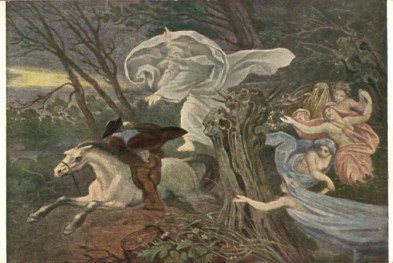
Erlkönig

Erlkönig

Erlkoenig_Schwind


Wer reitet so spät durch Nacht und Wind?
Es ist der Vater mit seinem Kind.
Er hat den Knaben wohl in dem Arm,
Er faßt ihn sicher, er hält ihn warm.

Mein Sohn, was birgst du so bang dein Gesicht?
Siehst Vater, du den Erlkönig nicht!
Den Erlenkönig mit Kron’ und Schweif?
Mein Sohn, es ist ein Nebelstreif.

Du liebes Kind, komm geh’ mit mir!
Gar schöne Spiele, spiel ich mit dir,
Manch bunte Blumen sind an dem Strand,
Meine Mutter hat manch gülden Gewand.

Mein Vater, mein Vater, und hörest du nicht,
Was Erlenkönig mir leise verspricht?
Sei ruhig, bleibe ruhig, mein Kind,
In dürren Blättern säuselt der Wind.

Willst feiner Knabe du mit mir geh’n?
Meine Töchter sollen dich warten schön,
Meine Töchter führen den nächtlichen Reihn
Und wiegen und tanzen und singen dich ein.

Mein Vater, mein Vater, und siehst du nicht dort
Erlkönigs Töchter am düsteren Ort?
Mein Sohn, mein Sohn, ich seh’es genau:
Es scheinen die alten Weiden so grau.

Ich lieb dich, mich reizt deine schöne Gestalt,
Und bist du nicht willig, so brauch ich Gewalt!
Mein Vater, mein Vater, jetzt faßt er mich an,
Erlkönig hat mir ein Leids getan.

Dem Vater grauset’s, er reitet geschwind,
Er hält in den Armen das ächzende Kind,
Erreicht den Hof mit Mühe und Not,
In seinen Armen das Kind war tot.

Johann Wolfgang Goethe (1749-1832)

Goethe_(Stieler_1828)

The Elf King

Who rides so late through night and wind?

It is the father with his child.

He has the boy close in his arms,

he holds him safe, he keeps him warm.

My son, why are you hiding your face in such fear?

Father, don’t you see the Elf King?

The Elf King, with crown and tail?

My son, that is a wisp of cloud.

You darling child, come, go with me!
Such nice games I’ll play with you,
there are many bright flowers on the beach,
my mother has many golden robes.

My father, my father, and don’t you hear

what the Elf King is softly promising me?

Be still, be still, my child,

in the dry leaves the wind is rustling.

Would the young master like to come with me?
My daughters shall wait on you beautifully,
my daughters lead the nightly lines
and they’ll rock and dance and sing you in.

My father, my father, and don’t you see

the Elf King’s daughters in that gloomy place?

My son, my son, I see it quite well:

it’s the old willows shining so grey.

I love you, I’m drawn by your handsome form,
and if you aren’t willing, I’ll take you by force!

My father, my father, he’s grabbing me now,

the Elf King has hurt me.

The father shudders, he rides like the wind,

he holds in his arms the moaning child,

reaches the yard with the utmost pains,

in his arms the child is dead.

Posted in Uncategorized | Leave a comment

Murder most foul

On the 27th April 1916, Prince Leopold Clement Philipp August Maria of Saxe-Coburg and Gotha died. For six months the prince had suffered the after effects of being shot and attacked with acid. In constant pain, he had suffered third degree chemical burns across his face; most of the flesh of his face had been burnt off; he had lost an eye; three of his ribs were smashed and his spleen was shattered.

Leopold Clement was the elder child and only son of Princess Louse of Belgium and Prince Philipp of Saxe-Coburg and Gotha. Born in July 1878, Leopold was the heir apparent to the House of Koháry. Like most young men of his class Leopold joined the military and became a Hussar captain in the Austro-Hungarian Army.

In 1913, Leopold attended a charity bazaar where he met Camilla Rybicka, daughter of the Court Councillor Rybicka, an officer in the Vienna State Police. Instantly besotted, the two quickly became lovers and set up in an apartment together in vienna. While Leopold was happy with Camilla as his lover, she wanted to marry Leopold. Unfortunately, Camilla although a member of high society was a commoner and would never be accepted by Leopold’s family. By the summer of 1914 Leopold had “agreed” to marry Camilla and while on duty in paris on 1st July wrote to her promising to marry her within six months, to name her as his heir and stating that he would request his father to pay her two million Austro-Hungarian krones in the event of his death.

When war was declared at the end of the month, Camilla demanded that Leopold marry her before he left for the front. Leopold was well aware that such a marriage would never have been allowed by his father. He also knew that any secret marriage would merely deprive him of his fortune the minute it was discovered as his father would disinherit him and that he would be forced to resign his officer’s commission.

When Camilla realised that Leopold had no intention of marrying her she threatened to reveal all to his father. After several weeks of increasingly angry confrontations, she agreed to accept Leopold offer of four million Austro-Hungarian krones as compensation.

On the 17th October 1915, the couple met at the flat they had taken in Vienna when they had first met. The meeting was initially tense but the couple stated drinking and ended up in bed making love for the last time. Finally it was time to say goodbye and Leopold produced the cheque for four million Austro-Hungarian krones. As he started to walk towards a table to sign the cheque, Camilla pulled a silk robe around herself and produced a gun from a cabinet drawer. She shot Leopold five times at close range. He staggered back and she took a bottle of sulphuric acid from the pocket of the robe and threw it into his face. She then turned the gun round and shot herself through the heart.

The shots and Leopold’s screams had been heard in the adjoining apartments and the police had been called. When they finally broke down the door they found Camilla lying dead on the floor beside the bed. Leopold, lying by her side, was moaning in pain.

Camilla was cremated in Jena, Germany in December 1915. The service was private. Leopold’s remains were interred in the vault of St. Augustin in Coburg in April 1916.


—oOo—

Posted in Uncategorized | Leave a comment

Lotte Reiniger – the woman who invented cartoons

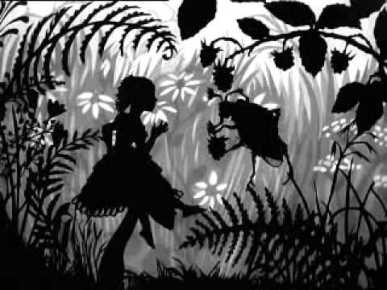
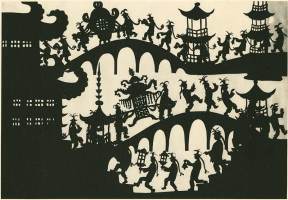
1926, saw the release of Die Abenteuer des Prinzen Achmed (The Adventures of Prince Achmed). Directed by Lotte Reiniger, the film was a feature-length animation that appeared ten years earlier than Walt Disney’s Snow White and the Seven Dwarfs (1937) and was the film, that it could be argued, invented the form of full length animation.

Charlotte “Lotte” Reiniger, was born on 2 June 1899  in the Charlottenburg district of Berlin.  As a child, Lotte was fascinated by the Chinese art of silhouette puppetry. She loved the imagery but was also deeply interested in the making of the silhouettes. From there she progressed to the film of Georges Méliès and Paul Wegener. Again both the final film and the creative process were of interest.

lottereiniger

In 1915, she attended a lecture by Wegener on the possibilities of animation and by soon after started work for him designing silhouettes. In 1918, Wegener was making his film Der Rattenfänger von Hameln (The Pied Piper of Hamelin), and Lotte animated wooden rat puppets using stop motion. This was so successful that she was was admitted into the Institut für Kulturforschung (Institute for Cultural Research), an experimental animation and shortfilm studio.

In 1919, Lotte directed her first film Das Ornament des verliebten Herzens (The Ornament of the Enamoured Heart, 1919). Although only a short, five minute film, it was well received and generated a lot on interest in her work.

In 1921, Lotte married Carl Koch, whom she had met at the Institut für Kulturforschung.

Over the next few years, Lotte and Carl collaborated on several films. She directed he acted as photographer and producer.  She also worked on special effects on a number of feature films most notably Fritz Lang’s Die Nibelungen (The Nibelungs) where she created a silhouette falcon for the cream sequence. It was during this time that Lotte started her work on a device, a manual shutter that shot backlit images through several planes of glass to achieve a layered effect giving depth to the shot. This device was a forerunner of the first multiplane camera.

hqdefault

In 1923, she was approached by Louis Hagen, and asked about making a feature-length animated film. This was a novel idea at the time as most animated films were shorts of around ten minutes. In 1926, Lotte completed Die Abenteuer des Prinzen Achmed with a plot derived from a variety of stories from One Thousand and One Nights.  The film premiered in Paris and became an instant critical and popular success.

MV5BNGRiYjNiMmYtMjIzNy00M2Q3LWJjMjctYzMyNjRlYWZhODU4L2ltYWdlXkEyXkFqcGdeQXVyNTAyODkwOQ@@._V1_UX182_CR0,0,182,268_AL_


achmed26-big

Following the success of Prince Achmed, Lotte was able to make a second feature, Doktor Dolittle und seine Tiere (Doctor Dolittle and his Animals) based on the first of the English children’s books by Hugh Lofting.

With the rise of the Nazi Party, Lotte and Carl decided to emigrate; both were involved in left-wing politics. They left Germany but could not find a country that would give them permanent visas. Between 1933–1944 they were forced to move from moving from country to country. They worked where-ever possible and even explored new areas such as music and animation. The majority of the films they made during this time contained covert, and in some cases, blatant, anti-Nazi motifs.

In 1944, still unable to gain a permanent visa anywhere, the couple moved back to Berlin to care for Lotte’s mother who was seriously ill. Lotte came under extreme pressure from the Nazis and was forced to make propaganda films for the regime. While these films, such as Die goldene Gans (The Golden Goose, 1944), are technically excellent, the stories are wooden and lifeless. When this became apparent to the Nazi authorities, Lotte was put under increasing pressure which was only relieved by the fact that the regime was coming under pressure itself from the increasing advances of the Allies.

In 1949, Lotte and Carl moved to London and worked for John Grierson and his General Post Office Film Unit. By 1953, Lotte had founded Primrose Production with Louis Hagen Jr. the son of the financier of Prince Achmed. With this company, Lotte made over a dozen short silhouette films based on Grimms’ Fairy Tales for the BBC and Telecasting America. Lotte continued to work on and off over the years, her last film being The Rose and the Ring, released in 1979.

220px-Lotte_Reiniger_1939

Lotte was honoured in her home country with the Filmband in Gold of the Deutscher Filmpreis in 1972 and the ; in 1979 she received the Great Cross of the Order of Merit of the Federal Republic of Germany in 1979. She died in Dettenhausen, Germany, on 19 June 1981, just after her 82nd birthday.

Lotte Reiniger was a true innovator in her field. Her style of  animation was quite different from anything else that was being produced in the 1920s and 1930s, she developed the techniques of shooting through several planes of backlit glass panels, created a feature-length animation ten years before Disney and used stop-motion animation in the way that entertained millions. But perhaps her greatest legacy is the creation of films that although over ninety years old continues to enchant to this day.

Die Abenteuer des Prinzen Achmed

https://tinyurl.com/ydb952js


—oOo—

Posted in Uncategorized | Leave a comment

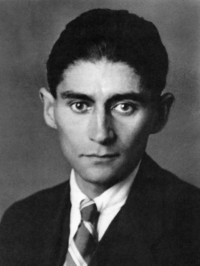
Franz Kafka – the workers’ friend

Everyone has heard of Franz Kafka, the writer of such masterpieces such as Metamorphosis and The Trial. His troubled relationship with his father, his love life and his eventual early death from tuberculosis are all well documented. What is less well known is his work for Die Arbeiter-Unfall-Versicherungs-Anhalt für das Königreich Böhmen in Prag (the Workers Accident Insurance Institute for the Kingdom of Bohemia in Prague).

5223

Kafka was a man who longed for love but with a fear of intimacy broke off all three of his engagements; longed for fellowship but retreated from friendships with only a few exceptions. He lived as solitary a life as he could stating that writing was his true vocation and that his job was merely a means to an end; independence from his father.

The Insurance Institute was a quasi-government organisation that dealt with safety standards in industry and industrial accidents. Kafka started work with the Insurance Institute in July 1908. His hours were to be 8 a.m. until 2 p.m. which suited his pattern of writing in the evening. The work was not overly onerous and allowed Kafka, after a short rest which he took every day, to think and write. It appeared he had found the perfect job; one that paid his bills but gave him the physical time and psychological conditions in which to write.

pic4

The Insurance Institute was an old organisation and, although by 1908 was attempting to reform itself and become more efficient, as a result the work frequently stagnated under the weight of bureaucracy and paperwork. Kafka could, if he chose, do the bare minimum of work and leave himself free to write. But Kafka the loner, the man who longed for friendship but feared intimacy and lived as solitary a life as he could became a champion of workers rights.

His work at the Insurance Institute frequently required him to assess insurance claims submitted by workers who had been injured in accidents. Kafka worked furiously to process claims quickly and to the fullest extent. In his spare time, he started to write, anonymously, letters and articles to the press about the conditions of workers in factories and the need for greater safety.

He wrote that certain companies were deliberately with-holding their mandatory contributions to workers insurance schemes. Articles appeared accusing managers and owners of knowingly putting workers lives and of bribing inspectors to falsify safety reports. As well as drawing attention to conditions Kafka offered practical solutions. In an article he wrote in December 1909 he outlines the accidents suffered by workers in timber mills when cutting wood. After detailing the cause of the accidents, he then goes on to offer a practical solution. It is extremely doubtful if his superiors in the Insurance Institute were aware Kafka’s activities. While some in the management were trying to reform the Insurance Institute, many more clung to the older ways. Several of those in the senior management were related to of friends with factory owners and would, had they become aware of Kafka’s letter writing, have instantly dismissed him.

As Kafka advanced through the Insurance Institute his new responsibilities required him to visit factories and industrial plants to assess safety regulations and insurance. These visits frequently brought Kafka into conflict with is superiors as he reported on every breach of safety regulation, on workers’ conditions and on the callous nature of owners and managers. Kafka refused to be silenced. Combined with his letters and articles to the press, and the slow but steady reforms being implemented in the Insurance Institute workers’ safety was improved and protected across Bohemia.

Kafka’s work with the Insurance Institute gave him first hand experience of the brutal nature of the industrial world and may well have inspired much of his writing. What should not be forgotten is his role in improving conditions for workers across Bohemia.

—oOo—

Posted in Uncategorized | Leave a comment

Krampus

So it’s that time of year again when families gather round the Christmas tree and children open their presents. Christmas has, of course, both pagan and Christian elements with many countries contributing various legends and traditions, for example, Sinterklaas from the Netherlands and Christmas trees and Yule logs from Germany. One of the less well-known but most striking elements is Krampus, a companion of Saint Nicholas. While Nicholas rewards the children who have been well-behaved with a gift, Krampus most definitely punishes those who have misbehaved.

Appearing across Austria, Bavaria, Croatia, Czech Republic, Hungary, Slovenia, South Tyrol and parts of Northern Italy, Krampus is a large horned half-goat half demon. He is hairy, usually brown or black, and has the cloven hooves and horns of a goat. His long, scarlet pointed tongue lolls out of his mouth and he has fangs. He carries a bundle of birch branches, a Ruten, and a set of long chains. He also carried a sack or wicker basket on his back.

WEB_krampus_690-824x549

Krampus first appears on 5 December on Krampusnacht the night before the Feast of St. Nicholas. He roams the towns and villages seeking out naughty children. Sometimes bells can be heard in the night warning children to mend their ways. He can then reappear a week later and those children who are still badly behaved may receive a swipe from his ruten. The following week he returns of the last time and those who remain stubbornly badly behaved may be taken off in his sack or basket never to be seen again.


ilmkwrlyza201

The earliest depictions of Krampus almost always show him with the ruten, a phallic symbol that also has connections with pagan initiation rituals. Unable to suppress Krampus the medieval church conflated him with the devil and images from that period show the addition of chains symbolising the binding of the Devil by the Church. However, Krampus remained an important figure and by the 17th century Krampus had been incorporated into Christian winter celebrations by pairing Krampus with St Nicholas.

lr_krampus_from_dullhunk_cc

In Styria, the Krampus gives Ruten bundles to families just after Christmas. These are painted and displayed year-round in the house as a reminder to children to behave. In Udine, the Krampus sleeps in caves the year round until December when he awakes and comes out and chases badly behaved children and whips them on the legs with the Ruten unless they repent of their bad behaviour and recite a prayer. In Croatia, children receive gifts and a golden twig to represent their good behaviour throughout the year. If the child has misbehaved however, Krampus will take the gifts for himself and leave only a silver twig to represent the child’s bad acts.

So do remember to behave this year, or else, look out for Krampus!

Merry Christmas, everyone!


—oOo—

Posted in Uncategorized | Leave a comment