The Prussian Royal Academy of Sciences and Letters

https://i0.wp.com/images.fineartamerica.com/images-medium-large/gottfried-leibniz-1646-1716-granger.jpg

Gottfried Wilhelm von Leibniz

The Prussian Royal Academy of Sciences and Letters (Königlich-Preußische Akademie der Wissenschaften)

In 1700 Gottfried Wilhelm von Leibniz founded the Berlin Academy. Leibniz was a polymath; historian, author, philosopher, mathematician and diplomat. Leibniz sought a revitalisation of German education and imperial standing through the establishment of an institution for the furtherance of science and communication. Leibniz viewed science as a two-fold tool; as a unifying factors in the various German states and when combined with economic policies as a key instrument of the State. With these aims in mind Leibniz sought a patron and found one in the house of Hohenzollern. Frederick, Elector of the Palatinate and later king of Brandenburg-Prussia.
in the 1690s Frederick was engaged in persuading Leopold I, Archduke of Austria and Holy Roman Emperor, to allow Prussia to be elevated to a kingdom; and for himself to thus become a king. As part of his argument for this change in status he was engaged in increasing the cultural standing of Brandenburg-Prussia. As part of this cultural renaissance Frederick wanted to reform the Prussian calendar. Recognising the work involved in such a reform Leibniz suggested the establishment of a society to undertake the scientific and technical work involved in producing accurate almanacs and calendars. Frederick agreed. He further agreed that the society would receive all the monies generated by the new almanacs. The academy would be self-financing and Frederick would receive the prestige of the institution but be saved the cost of its maintenance.
Originally called the Societas Regia Scientiarum (Royal Society of Sciences) the society was originally based on the Académie Royale des Science in Paris but with a ruling council similar to that of the Royal Society in London. Membership fell into four categories; physical sciences; mathematical sciences; literature and German language and history. Membership to the society was by royal appointment and received special privileges in return for its services. Unfortunately, the almanacs and calendars produced were extremely profitable and Frederick decided to appropriate the funds for himself. In addition, Frederick’s initial enthusiasm waned and the society lost focus. Frederick’s son King Frederick William I was even more indifferent and little scientific discovery was actually undertaken in the society.
In 1740, Frederick II ascended the throne and the fortunes of the society started to turn. Frederick had been exiled in France in his youth and was determined to open up the Prussian academy to wider international influences. The society was reconstituted in 1746 as the Berlin Academy; formally the Prussian Royal Academy of Sciences and Letters. A curriculum was introduced including classes were started in experimental philosophy, speculative philosophy, mathematics and literature. A new administration was established and the funds from the almanacs restored.
Frederick II remained true to his earlier enthusiasm and his court actively sought out international scientists for the new academy. The mathematician Euler was lured from St Petersburg to teach at the academy; Pierre-Louis de Maupertuis, the Newtonian came from Paris to become the academy’s president. Francesco Algarotti, arrived from Venice and the physician and philosopher Julien Offray de La Mettrie can from France. International prizes were introduced and the court guaranteed salaries in excess of that offered in Paris and London. Frederick made French the official language and paper were published in French, and German, allowing the academy to compete with Paris and London. The membership grew particularly strong in mathematics and philosophy and included Jean d’Alembert, and Etienne de Condillac. Immanuel Kant published several religious writings when at the academy that would have been censored elsewhere in Europe.
However the Academy fell into crisis for two decades in the mid-century due to internal rivalries between between Newtonianism and Leibnizian views, and the personality conflict between Maupertuis and Jean d’Alembert. Maupertuis, a monarchist, argued that the action of individuals was shaped by the character of the institution that contained them, and they worked for the glory of the state. By contrast d’Alembert took a republican rather than monarchical approach and emphasised the international Republic of Letters as the vehicle for scientific advance. This disagreement was not helped by the Seven Years War which saw France and Prussian in conflict. By 1789, however, the academy had gained an international repute while making major contributions to German culture and thought.

—oOo—
Posted in Uncategorized | Leave a comment

The end of the Dance

AB

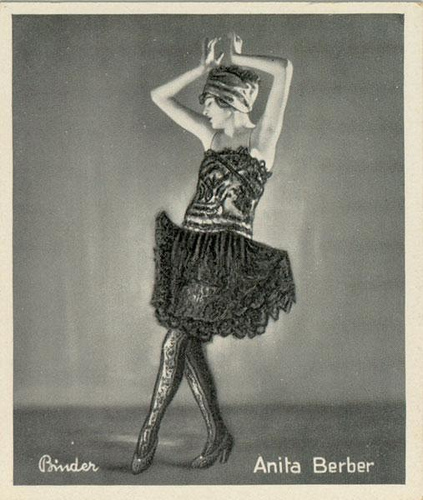
Around nine o’clock in the evening of Saturday the 10th November 1928 the twenty nine year old dancer Anita Berber died. Anita’s funeral was arranged for four days later. On the morning of Wednesday 14th November she was buried in St Thomas’ cemetery in the Neukölln district. Her funeral was a basic klasse 5 burial: plain coffin with no trimmings and an unmarked grave.
Over the next few weeks several newspapers and magazines printed obituaries. One of the first was by Hans Feld in Film-Kurier. Published on the 13th November, Feld wrote of Anita as the embodiment of Weimar Berlin. A challenge to Wilhelmian morality she was a force whose power would prove an inspiration for future generations. Der Film and Reichsfilmblatt, both published on the 15th November, carried critiques of her life and work outlining her contribution to Expressionist dance and acting. The 26th November edition of the Berliner Illustriete Zeitung saw her work as groundbreaking and inspirational. Musik und Theater, published on December 2nd lauded her unique contribution to dance and the edition of Filmbühne of the 10th December praised her acting skill in her many films.
But it was as a dancer that Anita existed; and a dancer like no other. She enjoyed the response that her dance generated and indeed thrived on it. She sought it, she fed off it, and in turn she responded to it. Her dance became a two-way process between her and the audience. She gave something to the audience but also took something from the audience. Her live performances gave her life. When she was dancing, when she was performing, she existed at that moment for the dance and the dance alone. When she acted she became the character. Anita did respond to her audience; she drew from her audience; but it was very much on her terms. She wasn’t adapting her act in the way of Josephine Baker, the great black dancer who brought the Harlem renaissance to Paris and Europe in the twenties. Josephine Baker was alive to her audience and adapted her act to the Parisian style and the French audience. But in the case of Anita although she drew from the audience and from their response her adaptation was very much on her own terms there was no compromise in her artistic content or the artistic message she was trying to express. There was adaptation; Anita did learn and grow from the response of the audience but it was more of her drawing from the audience what she wanted rather than a reciprocal relationship. When her dances were adapted in response to the audience, that adaptation could as easily be a negative one rather than a positive. A particular dance or element within a dance that elicited a negative response from the audience would be extended or exaggerated. Anita interpreted any lack of positive response from the audience as a challenge and would meet that challenge head on. The emotions she felt were played out in her dancing for the whole world to see. Her Expressionism was extreme, honest, contradictory and extraordinary; it was the Weimar Republic.
Anita had been, from the very start a troubled wild child. Her life was a series of bad choices and bad behaviour. In many ways she was a spoilt child demanding attention and throwing a tantrum when she did not get her way. Her excess in the use of drugs and alcohol as well as sexual parters and practices continued this pattern. But ultimately the only person she truly hurt was herself. It does not take much analysis to understand Anita and the various demons that tormented her. Her relationship with her mother was strained as a result of Lucie’s initial abandonment of her and subsequent emotionally unsupportive behaviour. With the parent who was present rejecting her Anita turned to the father who had also abandoned her. Time and again she sought to replace him and of course failed. And then there was the underlying guilt. Anita probably blamed herself for her abandonment as a child. What had she done to deserve that? She craved love and attention and like all children screamed when she felt unloved and ignored. Confused, scared, angry and unhappy Anita tried to get her parents attention and if she could not do so with good behaviour she would try with bad.
Unfortunately for Anita she happened to be living through a time and place that was also in turmoil and so wild behaviour was all around her. This normalised much of what she did but also meant that to be noticed she had to be really outrageous. Anita had to drink more cognac and champagne than everyone else; she had to take more and wilder drugs; she had to dance faster and wilder and more naked than anyone else. Her life was a constant search for the truth of why her father, and mother, had abandoned her. A search that she carried out through the medium of dance and against a backdrop of political, economic and social chaos. It was a potentially fatal combination that eventually did kill Anita but not before she gave some of the most amazing expressionist dance and film performances that Weimar Berlin ever saw. The Republic outlived Anita by only five years and its death has been attributed to many causes. A search by the German people for the truth behind their losses in the war through the medium of vicious partisan politics and a series of bad choices is one, amongst many, explanation. When seen in that light, the parallels between the Republic and Anita continue even unto death. Both did terrible things and wonderful things; both made foolish choices and yet created beautiful art. Anita Berber was a true child of the Republic. The likes of Anita Berber, and the Weimar Republic, will never be seen again.

—oOo—

Posted in Uncategorized | Leave a comment

The Bauhaus

bauhaus002


The Staatliches Bauhaus, or the Bauhaus as it became known was the revolutionary art school in Germany that combined the art and crafts. Active from 1919 until 1933 the ethos of the school was best exemplified in the modernist architecture that still bears its name. The Bauhaus ethos continues to influence architecture, interior design, graphic design and the arts. What is less well known is the history of its development and the political pressures that eventually saw its closure in 1933.

The Bauhaus could be said to have originated with Walter Gropius and his solution to the problems of the machine age. By the end of the 19th century, many in Germany, and elsewhere, had become disillusioned with the machines of the modern age; machines that threatened to control human lives. Machines had driven artisans out of work, created objects had lost their value and life was divorced from nature. Gropius determined to wrest control back. Artists would be freed from the tyranny of producing meaningless baubles, artisans would be freed from the tyranny of the factory and life would rediscover nature.  Architecture was to be the battle ground.

By the end of the 19th century architecture in Germany was stuck in a non-creative format. Public buildings were all neo-classical, factories were all functional steel structures and ordinary houses were basic boxes. Many in architecture were agitating for some change; some movement. Expressionism was sweeping across the artistic community and the architects saw a new potential.

At the end of the Great War, however, the government in Berlin were faced with a multitude of problems; architecture and any new direction was the least of their worries. Weimar held the Grand Ducal School of Arts and Crafts and the Weimar Academy of Fine Art. Conscious of the various calls for some form of new direction for architecture but loath to commit any real time or resources to such an idea the government merged the two institutions and called on Gropius to take charge.

Presented with this opportunity Gropius quickly attracted architects, painters and sculptors to the art school. He created a syllabus that married the arts and crafts together and gave life to the ethos of modern design for modern life. However, despite the previous calls for a new direction, Gropius’ innovative approach generated a considerable degree of criticism. Wilhelm van Bode, a well respected art collector and contributor to the Imperial museum in Berlin wrote to the government to complain about Gropius’ methods. Several of the professors from the Grand Ducal School refused to accept Gropius’ authority or indeed the existence of the Bauhaus and walked out setting up their own academy.

The town of Weimar was equally hostile. A relatively bourgeois town, Weimar did not understand Gropius or the Bauhaus and did not understand why they had lost their Ducal School and Academy. Although Gropius was generally unconcerned by the petty attitudes of the people of Weimar he was dependent on funding from the Thuringian state government. As a result he spent a considerable amount of time countering claims from right wing politicians regarding the waste of public money spent on the Bauhaus.

The Bauhaus struggled on, ever under the threat of losing its funding until 1923 when the government in Berlin became involved. 1923 had seen a variety of crises hit the government. In Thuringia, the socialists, concerned at the amount of ground that was being won by the reactionaries, decided to join the communists. The government in Berlin, attempting to maintain order between the various political factions, placed Thuringia under martial law. The army started to listen more closely to the complaints about the Bauhaus. The following spring the elections saw large gains by the factions on the right and further pressure was placed on the government to do something about the Bauhaus and its generally suspect activities. An official investigation into the school’s finances was launched. Unfortunately the Bauhaus had had five different business managers in six years and although there was no impropriety in their finances they were muddled  enough for just such an accusation to be levelled. The investigation ordered all employment contracts to be terminated on September 1924, just at the beginning of the new teaching year and halved the state funding to the school. Gropius announced he would dissolve the Bauhaus.

Just at the moment, Dr Fritz Hesse, the Social Democratic Mayor of Dessau, offered the Bauhaus a home in his town. The Bauhaus built its own school and by 1925 had re-established its teaching programme. The work continued to evolve and by 1928 Gropius gave way to Hannes Meyer as architect-director of the Bauhaus. Meyer was more socialist than Gropius had been and moved the ethos of the school in this direction. However, Meyer’s main focus was on the development of architectural styles and was not predominantly political. Meyer attempted to keep the school out of the increasingly fraught national politics. When several students attempted to form an active Communist group in the school Meyer stopped them. Unfortunately Dr Hesse felt threatened by this and dismissed Meyer as director. The Dessau council asked Gropius to return. Gropius declined but suggested Ludwig Mies van der Rohe as the next director. Rohe was appointed in 1930. Unfortunately for Rohe he was in post for barely a year when the National Socialist Workers’ Party gained control of the Dessau council in the elections of 1931. Within weeks of gaining control Nazis made clear their intention to close the Bauhaus.

In late 1932 Rohe moved the Bauhaus to a derelict factory he rented in Berlin using his own money. Condemned by the Nazis as un-German and as a front for communists, Rohe knew that the Bauhaus was living on borrowed time. All too soon the Gestapo closed them down. They had operated in Berlin for barely ten months. Rohe challenged the closure of the Bauhaus and surprisingly the decision was changed. However, despite this victory, Rohe knew that the Bauhaus  would never be allowed artistic freedom under the Nazis and decided to close down the school.

Despite its brief existence, the Bauhaus was and remains influential across the world. What should not be forgotten, however, is that the talent that was nurtured and the artistic influence that was created came from a school that existed for barely 14 years; had uncertain funding, existed in unsupportive surroundings; had to move twice and was under political threat for almost all of its existence.

—oOo—

Posted in Uncategorized | Leave a comment

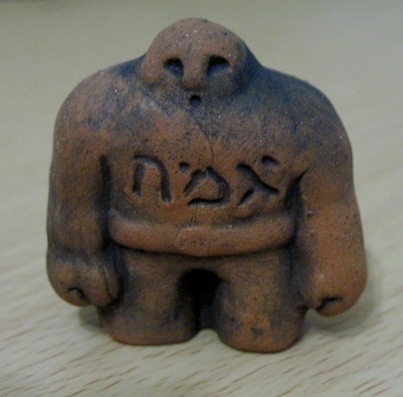
The Legend of the Golem of Prague

???????????????????????????????


In the 16th century Prague had a large Jewish community that lived in the ghetto known as the Josefov. The Jews had lived in Prague for many years rubbing along reasonably with their Christian neighbours.  In the 16th century, however, things deteriorated and the Jewish population increasingly came under attack. The people did not know what to do. Should they leave but then where should they go? Should they stay but then how would they make a living? As the century wore on conditions grew worse and a rumour soon circulated around Josefov that the Holy Roman Emperor Rudolf II was to expel all the Jews from his lands; or even worse have them killed. The people of Josefov despaired and turned to their Rabbi; what should they do. The Rabbi, Judah Loew ben Bezalel, also known as the Maharel, listened to his people and then spent a night and a day in deep study. He gathered the old books and manuscripts of his fathers searching for an answer to his people’s plight. Finally in an old Chaldean book he found his answer. Taking a clean piece of parchment he write down three lines of Hebrew and as the ink dried readied himself for the work ahead. Rabbi Loew took the heavy key from the bundle that lay on the desk and lifting up a lamp and the parchment walked towards the small door at the back of his library.  The key was stiff in the lock; the door had not been opened for many years. As Rabbi Loew climbed the old stone steps that led up, up and up he remembered his great grandfather Bezalel.

One night a long time ago the people of Josefov had been threatened and then Bezalel, a great man amongst his people, had secretly slipped down to the banks of the Vltava. There he had gathered the mud of the river bank and formed it into a figure; a Golem. And with that Golem the Jews of Prague had been saved from harm.

Rabbi Loew reached the top of the stairs and opening an old wooden door he entered a room in total darkness. Lifting his lamp up high he saw the large shape in the corner. He walked forward and smiled at the sight of the Golem lying slumped on the floor. Rabbi Loew bent down and slipped the parchment or Shem into the Golem’s mouth. Then muttering a mystical prayer and speaking gently called on the Golem to wake up. The clayman shifted and his eyes opened. Rising to his feet he bowed stiffly to the Rabbi.

The Rabbi named the Golem Josef or Yossele and he walked the Josefov keeping the people from harm. The people rejoiced and felt safe with Yossele. The young men so fond of throwing stones at the Jewish women in the market were soon scared off by the strange looking Jew called Yossele. The merchants who failed to pay the debts they owed soon arrived with full purses after a visit from Yoselle. On the following Friday afternoon Rabbi Loew called the Golem to him. It was one hour before sunset and the Rabbi was mindful of the teaching that all should remember the Sabbath and keep it Holy. Looking at the Golem he spoke his mystical prayer and removed the Shem from the Golem’s mouth. Instantly the clay eyes shut and the creature slumped to the floor no longer alive.

The Sabbath was celebrated and many gave thanks for the peace and the protection that now appeared to be surrounding the Josefov. On the following Sunday evening Rabbi Loew again awakened the Golem with mystical prayers and placed the Shem in his mouth. Once more Yossele walked the streets of the Josefov and once again the people went about their business with no fear. And so it continued for many weeks. But perhaps not quite as normal. Golem did more than just scare the young men perhaps he even beat them. Those who came to pay their debts did so with bruised faces and black eyes. But the people of Josefov felt happy and safe.

One Friday late in the year Rabbi Loew was called to visit a family whose son was wandering from the faith. Meeting in an inn the old couple pleaded with the Rabbi to help them. The young man was headstrong and argued fiercely with his parents. After an hour with little progress Rabbi Loew sent the Golem to fetch some food for them all. The arguments circled between them all and even the food did not seem to help. The Rabbi was disturbed by the thought of the young man leaving the faith and grew distracted. Eventually with nothing settled the company went its separate ways. The Rabbi headed for home, the old couple to their house and their son remained in the inn. As Rabbi Loew walked along he turned into a side street and realised how dim the light was. The sun was about to set it was almost Sabbath. Rabbi Loew flew to the synagogue and arrived just as the choir starting singing the Lecho Dodi; Sabbath had begun.

And then at that moment two things happened. The young man in the inn suddenly fell to the floor convulsing and crying out in agony and died in a matter of moments his lips blue with poison. And Rabbi Loew suddenly remembered the Golem.

When the choir started singing the Lecho Dodi and Sabbath began Golem realised he was still alive but with no master to control him. Like a child without a teacher he gleefully ran up and down all the stairs in the Rabbi’s house. When he tired of that game he started to smash the dishes in the kitchen and break the furniture. Next he went to the Rabbi’s bedroom and threw the furniture about. Naturally all this made a noise and soon a crowd began to gather outside the Rabbi’s house to wonder at what was going on inside. No sooner had they arrived when the rabbi’s slippers flew out of the window to be quickly followed by a coat and some trousers. Soon the crowd below were gratefully cheering at every donation thoughtfully provided by the Golem as he emptied every wardrobe and chest in his master’s bedroom. The bedroom was soon wrecked and the Golem moved on to the Rabbi’s library.

By this time Rabbi Loew had arrived home to see the happy crowd, his hats being worn by several local youths and two men fighting over his fur coat. He rushed inside and found Golem in his library his big clay fists already full of books. Rabbi Loew knew he had no time to lose and taking his chance while Golem’s hands were full he flew at the clay man and snatched the Shem from his mouth. The Golem instantly fell to the floor the books tumbling from his lifeless hands.

Rabbi Loew hurried back to the synagogue and instructed the choir to sing the Lecho Dodi again. Although this struck many as unusual they obeyed and Sabbath started afresh with no sin. On the Sunday morning, Rabbi Loew dragged the Golem up, up, up the stairs and locked him in the dark room. And there he stays asleep ready to be awakened if he is ever needed by the Jews of the Josefov.

—oOo—

Posted in Uncategorized | Leave a comment

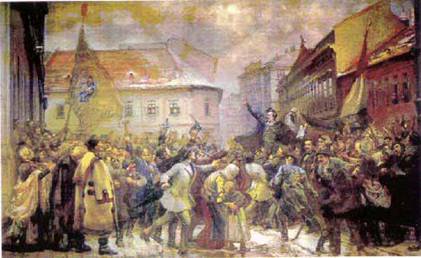
The Czech National Revival Movement

czechoslovakia1918_1

The Czech National Revival was a cultural movement, which arose in the Czech lands during the 18th and 19th century. The movement aimed to revive the Czech language and culture as the bedrock of a revived Czech national identity. After the Battle of White mountain in 1620, the Hapsburg Emperors, in order to maintain control over their vast empire, had imposed a policy of Germanisation on the Czech lands. The German language was imposed on the state administration, the church and education. In addition, attempts were made to re-Catholisise the predominantly Protestant population.

By the 18th century the elite within Czech intellectuals such as Josef Dobrovský and Josef Jungmann conscious of the growing sense of frustration amongst many across Czech society started the National Revival. This movement included many radicals but also members of the Czech nobility who chafed against the need to use the German language and perceived denigration of their Slavic heritage. Despite their position within the establishment many of the nobility had a keen sense of their heritage and started to finance the activities of scholars working in the fields of Slavic history, culture and language.

And the Czech language was the key element of the National Revival. In 1809 Dobrovský published his Czech grammar book and between 1834 and 1839 Jungmann published the five-volume Czech-German dictionary. The dictionary had a great influence on the Revival Movement re-introducing the Czech people to their mother tongue as well as developing the language with borrowings from other Slavic languages. The aim was to protect the Czech language and promote it as a statement of Czech national identity. With this aim in mind two new national institutes had been previously founded;  a chair for the study of Czech language and literature at Charles University in Prague in 1793 and the Bohemian Society of Sciences in 1784, which became the Royal Bohemian Society of Sciences in 1790). At about the same time the first Czech publishing house, Česká expedice (Czech Expedition) was established in 1790 by Václav Matěj Kramerius. These were followed in 1831 by the establishment of Matice česká; a branch of the National Museum dedicated to the publication of articles and books in the Czech language.
In 1832 Matice česká took over the production of the Journal of the Bohemian Museum. The Journal published articles in Czech rather than German which was the language of the
Royal Bohemian Academy of Sciences. It was Matice česká that published Jungmann’s  Czech dictionary.  Although the Pražské poštovské noviny (Prague Post News) which appeared in 1719 was written in Czech it was not a campaigning newspaper. In 1789, however, the Krameriusovy císař ské královské pražské poštovské noviny (Kramerius’ Royal Prague Post News, appeared and was followed in 1806 by the Hlasatel český (Czech Herald) which was a highly influential literary journal.

Once the Czech language was re-established the National Revival blossomed.  Slavic culture could be openly celebrated in the Czech language. Novelists and playwrights flourished and the National Theatre opened in 1883. František Palacký soon entered the fray. As a respected historian Palacký was able to combine an authoritative voice and academic foundation to Czech history. His most influential work Geschichte von Böhmen was published in 1836 in German
and exposed the German speaking world to the depth and breadth of Czech (and wider Slavic history). After 1848 he wrote a vastly expanded version of his history in Czech; Dějiny národu českého v Čechách a v Moravě (History of the Czech Nation in Bohemia and Moravia).

Between between 1848 and 1861 academics and intellectuals worked to promote their ideas across the nation through articles in newspapers, pamphlets and speaking tours across the country. By 1861, a fully-fledged mass national movement existed and the political party, Národní strana (Old Czechs), was formed. Things began to change especially across the period in the latter half of the 19th century when the country started to industrialise; serfdom was abolished in 1848. But the heart of the movement still remained with the intellectuals in academia. By 1882 the tutors and students of the Czech part of Charles University refocussed the movement and called for a critical re-reading of Czech history and culture. Calling themselves the Realist School they were led by Jan Gebauer in linguistics, Tomáš G. Masaryk in philosophy, and Jaroslav
Goll in history. Determined to build a nation that was founded in real Czech culture rather than a romanticised past they challenged the authenticity of some ‘medieval manuscripts’ that had been ‘found’ in the 1860s. These manuscripts appeared to show an idealised medieval Czech past but one that was heavily influenced by Germanic culture. The refection of this romantic and comfortable history by the Realists led to accused of them being ‘anti-national’ and the leadership of the movement passed to those writers and journalists that favoured the romanticised past of the chivalric period. However, despite these splits in the movement the genie could not be put back in the bottle and agitation for greater freedoms and equality of nationality continued to pervade Czech society.

By 1900 calls for the Czech lands to leave the failing Hapsburg Empire could be openly heard on every street corner and while there were as many political agendas as there were towns in the Czech lands they all owed their origins to the National Revival Movement. During the Great War some Czechs, the Czechoslovak Legions, fought with the Allies in France and Italy, while large numbers deserted to Russia, in exchange for their support for the independence of the Czech lands from the Hapsburg Empire. With the end of the Great War in 1918, the revival movement had finally achieved its initial purpose with the establishment of the republic of Czechoslovakia.

—oOo—

Posted in Uncategorized | Leave a comment

Central European Culture: a treasure chest for the world

image012


Central Europe is a slippery term. Although the idea of a central region within Europe has been recognised since the middle ages, and was at that time called ‘Middle Europe’, its exact borders and extent remain difficult to define. Perhaps that vague quality adds to the status and mystique that is central Europe. Indeed although most individuals would state with authority that central Europe lies between the Eastern and Western regions of Europe the specifics of what that means varies with each individual. Germany is confidently named as a central European state yet its neighbour Poland elicits a somewhat more hesitant response. Slovakia may make the grade, but Slovenia…

Perhaps the concept of central Europe is on safer ground when physical geography is laid aside.
Yet again we confidently assert that there is a common central European culture but often fall at the first hurdle of defining what we mean. Perhaps our notion of a central European culture betrays not so much the difficulties we face in framing the definition as our lack of knowledge in even constructing the frame.

If we take as a loose definition, and one that is open to endless argument, a central Europe that comprises the countries of Austria, Czech Republic, Germany, Hungary, Poland, Slovakia and Slovenia how many of us in western Europe can truly say that we understand the vast diversity and complexity of such a region? Our concept of central European culture is firmly fixed within Germany and Austria with the occasional nod to the Czech Republic and Poland. But why should this be so?

The region has been known as central Europe since, arguably, the 11th century. Its historical credentials remained intact through the fluctuating borders of the Hoy Roman Empire, the upheavals of the Reformation and the revolutions of the mid 19th century. The 20th century, however, saw central Europe divided against itself. The cold war pitted east against west politically and physically and central Europe became a battlegrounds of competing ideologies. But now in the 21st century central Europe is once more a complete entity. And yet despite a thousand year longevity, with only a brief hiatus, the notion of central Europe remains elusive.

We may talk of the culture of central Europe but what do we in the west really mean by that? Do we mean the music of Beethoven, Bach, Mozart, Wagner, Mendelssohn; our western ignorance is showing. We try harder with Chopin, Smetana, Dvořák and Janáček and then probably start to falter. We fair little better with folk music attempting to remember the names of at least one Klezmer musician, Yale Strom, failing entirely to recognise the music’s roots in eastern Europe and Jewish traditions. And we are no safer on artistic ground. Who in the west knows the names of Hirémy-Hirschl Adolf or Mányoki Ádám let alone anything about their work. In literature the works of Hermann Hess and Erich Remarque may be joined by Franz Kafka but Boleslaw Pruss and Cyprian Norwid remain a mystery. The philosophers of Germany shine brightly through western thought; not so those of Slovakia or Hungary. Arthur Koestler is known in the west primarily as a novelist and one who conveniently died in London.

And yet we do have our perceptions of central European culture. Fed by a diet of poorly translated folk lore, such as the tales of the Grimm brothers and films of the weird and wonderful, Dracula,  we accept the easily digestible fantasy rather than attempt a meal of the more meaty and hugely more satisfying facts.

So why should this be so? Is this a matter of simple ignorance or is it tinged with a reluctance to admit our lack of willingness to engage in what is different? The language of Germany and Austria may not be known but is, at least, perceived as attainable. The languages of Poland and Hungary are seen as ‘difficult’. Translations of foreign language books are viewed warily. Religious traditions vary across countries and in the secular west the difficulty of religious nuance can easily be confusing leading to misunderstandings that results in mumbled apologies and fears of having given offence. Unable to understand and bewildered as to where to begin we retreat to the safety of Beethoven and Grimm’s fairy tales. But in doing so we do ourselves a great dis-service. The culture of Central Europe is vast and diverse; it is wonderful and terrifying; it is exhilarating and bewildering. To jump in is to be surrounded by an amazing cornucopia of art, music, literature, philosophy and much, much more. The cultural outpouring that Central Europe has given and continues to give to the world is there for all. It is a gift that asks nothing of us. We can, if we choose, merely dip our toes in the shallows; how much more will we gain if we dive into the deep end?

—-oOo—-

Posted in Uncategorized | Leave a comment

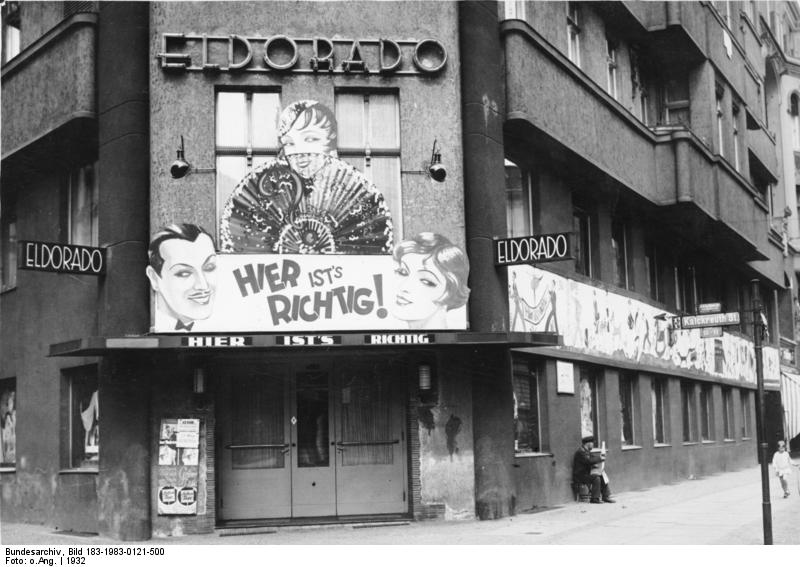
The beginnings of Weimar Cabaret

Berlin, Bar "Eldorado"

The Weimar Republic came into being in confusion and fear. It was born of a war that had killed and maimed millions and wrought destruction across a large part of Germany and the rest of Europe and elsewhere. The Republic brought with it the remnants of the Wilhelmian era, the shame and anger of the dictated peace and the shattered hopes and dreams of the German people on the right and left of the political spectrum. The trauma of the war and its abrupt and unexpected end threw all of Germany into confusion. The German people had to contend with an unexpected military defeat and the abdication of the Kaiser which raised questions over the reason for the war.
Although fighting had stopped on the Western Front on the 11th November it continued and indeed intensified on the streets of many German cities most notably Berlin. In October 1918 the sailors at the Kiel Naval base mutinied. Homecoming soldiers returned to a confused public led by brawling politicians. On November 8th Kurt Eisner, an independent socialist, proclaimed a republic in Bavaria. On November 9th Philipp Scheidemann of the Social Democrats proclaimed a republic in Weimar. The Weimar Republic survived; the Bavarian did not. But within days of the proclamation of the new Republic left and right wing factions were on the streets fighting. On the 26th November Eisner called on the workers’ and soldiers’ council of Berlin to overthrow the interim government. It was not an auspicious start.
The interim government had to run a country that was recovering from war and negotiate peace terms with the Allies, while faced with attacks from left and right. The government was viewed with wary suspicion by the Allies and with angry resentment by the remains of the Austro-Hungarian Empire. It received no international help in rebuilding the shattered country. The government was thought to be too revolutionary for the conservatives; it was also viewed as not radical enough for the communists. Attempting to deal with practical issues such as that of returning soldiers and the economy the government was constantly undermined by both left and right seeking their own interests over other considerations. By December 1918 parades for returning soldiers were interspersed with demonstrations by Spartacists. Government troops fought the communists using heavy machine guns.
This difficult birth presaged the subsequent development of the Republic. There was  never any time, to resolve any of the underlying issues in the country before another crisis hit. The reparations demanded by the Allies put an immense strain on the country’s economy as did the French occupation of the Ruhr and the blockade of German ports. Returning soldiers faced unemployment and financial hardship. Right and left argued over blame and disagreed about solutions and many gave way to extremes on both sides. Successive governments attempted to steer a middle course but with a definite and growing rightwing bias. By the early twenties things had somewhat settled. The government was led by the conservatives but with a greater level of control. Political violence lessened although it did not disappear. The French evacuated from the Ruhr allowing German industry to get moving and the economy strengthened. The Treaty of Locarno was signed with Great Britain, France, Italy and Belgium and Germany was no longer a pariah state. However, these economic and social improvements, although very welcome, did not mean prosperity for all. Germany had, after all, to recover from extreme conditions. More importantly, nothing had been done to deal with the underlying problems in Germany which, when the world economy crashed in 1929, caused the extreme political elements to come to the fore.
These underlying problems had been developing since the beginning of the century. While the 20th century heralded the modern era of the machine most of German society still hankered after the time of heroes. Romanticism and the love of Germanic legend still held true. Germans felt themselves to be under threat from the machine that separated them from the land and from their inner soul. And this was underpinned by the German obsession with death. The fixation on mortality was understandable given the losses in the Great War; Germany had lost around 2 million soldiers with a further ¾ million civilians dying from disease and malnutrition. But the nihilistic philosophy of Nietzsche and his assertion that modern man had killed God also contributed and created an ethos where death, its meaning and its purpose became all pervasive. Discussions were held in cafes and bars as the population watched injured soldiers return to a heroes’ welcome. Life was becoming unreal. Parades in Berlin treated the returning soldiers as if they had won the war. The Dolchstoβlegende (stab-in-the-back) legend was born blaming Jews, communists and women for the disgraceful end to the war. The politicians argued over how to organise the economy while war wounded were on the streets begging for food. The German had lost his way; the machine had fragmented his life and left him with a shattered soul and the only reality that was true was death.
This ethos did not exist in a vacuum and built on the cultural changes that had been happening in Germany since the turn of the century. Feelings of restlessness had led many to welcome Germany’s military build-up and the start of the war when it came. The world was changing and new ideas in science, philosophy and the arts flourished. Germany embraced and was the instigator of many of these new ideas but was still ruled by an elite that saw no need for societal change. Anti-Semitism was rampant in the universities, the military were held in high esteem and German Kultur was praised for its purity and lack of contamination by western values. This tension between the values of the conservative bourgeoisie and the rest of society could not last forever and it was the Weimar Republic that inherited the cultural riches that resulted from the release of that pressure.
Artists watched the political machinations of left and right and treated much of it as irrelevant to what was really happening to the German soul. The longing for unity and desire for an understanding of death in its most primitive form moved artists and political activists alike but moved them differently and ultimately antagonistically to each other. The politicians squabbled over how to make Germany whole again but did so using the nineteenth century model of the political form. Even the Spartacists, who thought of themselves as the new revolutionaries of the age, based their ideology firmly in the class divisions determined by Marx in 1848. As a result there was a deep and almost instinctive distrust of the politics of the Republic from many artists. For the artistic community wholeness could only come about through modernity. Expressionism was the first major artistic movement after the war which gave artists the means by which to explore and interpret that modernity. Expressionism, by its very nature, did not create or follow a single message other than a desire to seek the wholeness of the German soul. Expressionism explored the emotional experience of life and death; politics merely attempted to control them without caring to understand them. It was this world that saw the flourishing of the cabarets of Berlin.

—oOo—

Posted in Uncategorized | Leave a comment

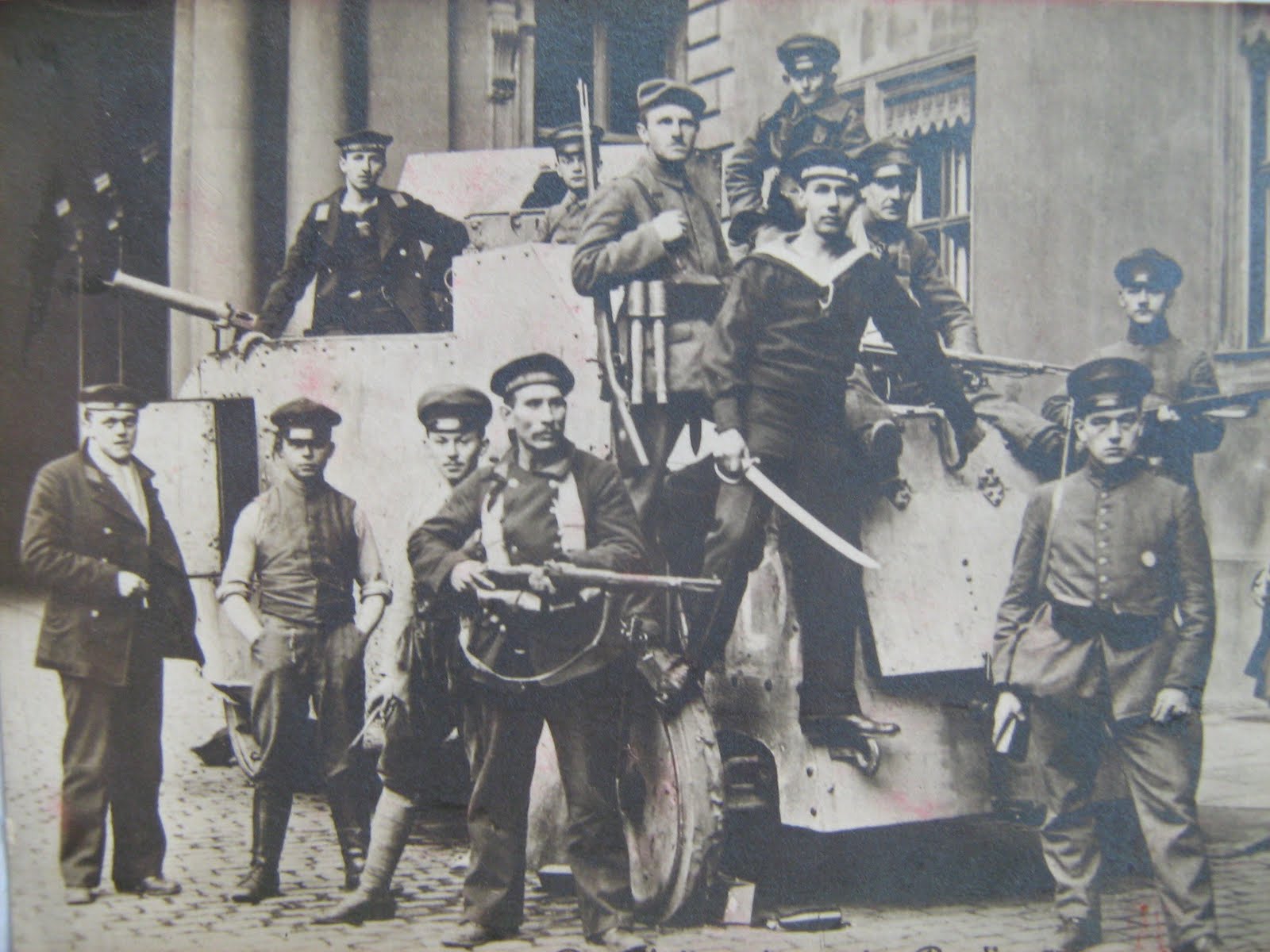
Berlin, December 1918: a Christmas tale

1st World War 015

December 1918 saw the young dancer Anita Berber caught up in the political turmoil of post war Germany. On the 6th of December the tension that had been brewing between the leftwing Spartacists and the rightwing government troops descended into violence. Fighting broke out across Berlin and government troops killed sixteen Spartacists. President Ebert condemned the ‘anarchism’ of the Spartacists but the interim government was also facing problems from factions on the right. Hindenburg had demanded that the government disband the newly created soldier’s councils and return control of the army to the Reich officer corps alone. On the left Karl Liebknecht called for a world revolution and denounced both Ebert and Hindenburg.
Three days later on the 9th of December a demonstration of around 5,000 people marched through Berlin. They marched through the Brandenburg Gate and along Unter den Linden where they listened to a speech by Liebknecht calling for them to ready themselves to fight for the revolution. The next day the Deutsche Vaterlandspartei (DVP) (German Fatherland Party) dissolved and joined the Deutschnationale Volkspartei (DNVP). The DVP had only been founded in 1917 and had been prominent in promoting the Dolchstoβlegende. The Dolchstoβlegende (stab-in-the-back) legend was the convenient excuse that blamed the Jews, communists and women on the home front for the disgraceful end to the war.
Amongst all this political turmoil on the 12th of December Dida Ibsens Geschichte: Ein Finale zum Tagebuch einer Verlorenen von Margaret Böhme starring Anita in the title rôle premiered in Berlin. The reviews were good despite the film having had to compete with events on the streets. On the 17th the streets around the Brandenburg Gate were decorated with garlands and flags of red, black and white, the imperial colours. There were noticeably fewer flags in the Republic’s colours of red, black and gold. Returning German soldiers were greeted by Ebert at the Brandenburg Gate as ‘unconquered in the field of battle’. His address was reported in full in the Berliner Illustrierte. These celebrations continued the next day. Soldiers who had retreated in disorder strode down Unter den Linden garlanded as heroes. Government officials and the factions of the right treated them as heroes, despite the surrender of Germany the previous month. Thousands of Berliners turned out to watch the parades; some supportive, many others merely entertained by the spectacle. Most on the left stayed away and those who did attend remained relatively quiet.
At this time Anita met Eberhard von Nathusius. An actor and screenwriter, Nathusius was intrigued by Anita. and pursued her over the Christmas holidays. The parades of returning troops gave the city a festive feel to add to the usual Christmas celebration. Many Berliners were genuinely glad to welcome home husbands and brothers. But it was an uneasy time and celebrations in a bar could quickly turn nasty as arguments broke out over the war and how it had ended. Nathusius and Anita went out on the town despite the continued violence. Nathusius preferred to seek out the quieter, better class areas. He liked to travel in his car when he could get the petrol. Anita on the other hand loved to walk the Berlin streets no matter the danger and actively sought out the drama that was unfolding on a daily basis.
The parades and spectacle continued. On the 21st December the Spartacists held a funeral procession for their members that had been killed on the 6th. It ended with a rally in the Tiergarten Park where Liebknecht swore revenge on the murderers. This was followed the next day with more parades of returning troops. At Wilhelm Straße a large group of wounded and disabled veterans disrupted the parade. Some were wearing placards saying ‘throw the guilty ones out’, openly referring to those military leaders whom they believed responsible for their injuries. Others attempted to join the parade with the able bodied troops. The police held them back and scuffles broke out along the parade route creating an embarrassment for the government and a further spectacle for Berliners. The situation was reaching crisis point.
On the morning of the 23rd members of the People Naval Division from Cuxhaven occupied the Reich Chancellery and Hohenzollern Palace. They took Ebert hostage and demanded to receive the wages owed to them. Ebert ordered them to leave the building and return to their base at Cuxhaven. They refused but then abducted and beat Otto Wels, the city commandant before taking control of the central telephone exchange. Ebert managed to get a message out to the German Military Supreme Command, General Lequis, requesting help. Lequis mobilised his troops in Potsdam and headed for Berlin. When he arrived in the city Lequis set up his central command post at Unter den Linden near the city palace.
On Christmas Eve Anita and Nathusius went out for the evening. They were strolling along Unter den Linden when fighting broke out between the revolutionaries and Lequis’ troops. The Christmas decorations were a strange backdrop to the intermittent sound of gunfire. Nathusius was keen to hurry home but Anita decided to join in with some street singing.
‘O Tannenbaum, o Tannenbaum, der Kaiser ist weg, um pinkeln zu nehmen’
(Oh Christmas tree, oh Christmas tree, The Kaiser’s gone to take a pee).
On Christmas day Anita sat down to a traditional dinner with Nathusius and her family at their apartment at 13 Zähringer Straße in the Wilmersdorf district of Berlin. While they were eating Lequis’ troops attacked the members of the naval division and killing several fellow Germans before returning to their temporary barracks to be wished Frohe Weihnachten by their commander and president Ebert.

—oOo—

Posted in Uncategorized | Leave a comment

Die Prostitution – Film censorship, a tale from 1919 Berlin

berberposter379

Richard Oswald’s film, Die Prostitution, created a scandal on its release in the spring of 1919. On May 1st Die Prostitution (The Madam) premiered in the Marmorhaus cinema in Berlin. The title of the film attracted the attention of the sittenpolizei ( morals police) who were watching Richard Oswald.   His previous film, Anders als die Andern, about the blackmailing of a homosexual who commits suicide had been an outrage in the eyes of the authorities. Realising the threat by the sittenpolizei to ban Die Prostitution Oswald changed the title of the film to In der Gosse der Großstadt (In the Gutter of the Big City) and under this guise organised its distribution across Berlin albeit in mostly working class areas.
In In der Gosse der Großstadt Anita Berber played the lead rôle of Lona, daughter of a respectable bourgeois family who is enticed into the white slave trade. Reviews of the film were mixed. Kurt Tucholsky, the critic for the Berliner Volkzeitung, decried the label of social-hygiene finding the film utterly immoral. It was, he wrote, ‘prostitution with an aesthetic mask’. He did however, find Anita’s performance praiseworthy. Anita played the rôle of Lona with just the right hint of bourgeois naïvety. It was a subtle performance which highlighted her acting ability as well as Oswald’s skill as a director. The rôle  could, in the hands of a lesser talent, have easily slipped into melodrama.
After the problems with  Anders als die Andern Oswald had taken advice from Dr Magnus Hirschfeld, the ground breaking sex therapist, when making Die Prostitution. However, this proved counterproductive as the authorities’ opinion of Hirschfeld,  was of a doctor of degeneracy. In fact Magnus Hirschfeld was both Jewish and homosexual, both facts which would have damned him in the eyes of the Berlin authorities, although at that time his sexuality was only suspected. Oswald’s use of Hirschfeld as an advisor merely served to further ‘prove’ to the authorities about the sexuality degenerate nature of In der Gosse der Großstadt. The authorities remained adamant and demanded that several key scenes from the film were cut and its title changed, again, to Das Gelbe Haus (The Yellow House). The deletion of the scenes ordered by the authorities removed key elements in the plot and, it could be argued, heightened the sexual nature of the film. It certainly weakened the film and caused confusion in audiences, as did the two name changes. Although most audiences and certainly all the film critics realised the damage done had been the work of the authorities there was nevertheless enough confusion in the butchered plot of Das Gelbe Haus that audience numbers were affected and some cinema managers became reluctant to show the film. In addition, the Prussian Commissioner on vice actively discouraged the distribution and showing of Das Gelbe Haus and by 1921 it had been banned in several towns. As a result of the damage to the plot and the difficulty in finding cinemas willing to screen the film Oswald finally withdrew the film from public distribution.
The disagreements over Das Gelbe Haus were not an isolated case of a single left wing film director versus an overly zealous police authority but were symptomatic of a wider problem between the arts and the post-war codes of morality in 1919 Berlin. The authorities were struggling to cope with the increasing variety of artistic output from film, art, dance and satirical cabarets that tested the Wilhelmian code of morality. The laws on morality remained on the statute books but the authority of the interim government to enforce the laws was shaky.  The new Republic had initially loosened some of the codes around censorship of the arts but that had not been followed by any more legislation and in truth was poorly implemented. In addition most in the vice police and culture ministry remained wedded to the Wilhelmian codes. Within this confusion artists were pushing at the boundaries of morality in all fields and increasingly producing works that shocked and scandalised. The police reacted by arresting artists; the left supported the artists with public demonstrations; the right fulminated about the loss of German morality and the public attended their plays, watched their films and viewed their art. This confusion over the morality codes and their interpretation and implementation within the arts would prove a recurring issue within the lifetime of the Weimar Republic.

—oOo—

Posted in Uncategorized | Leave a comment

Anita Berber

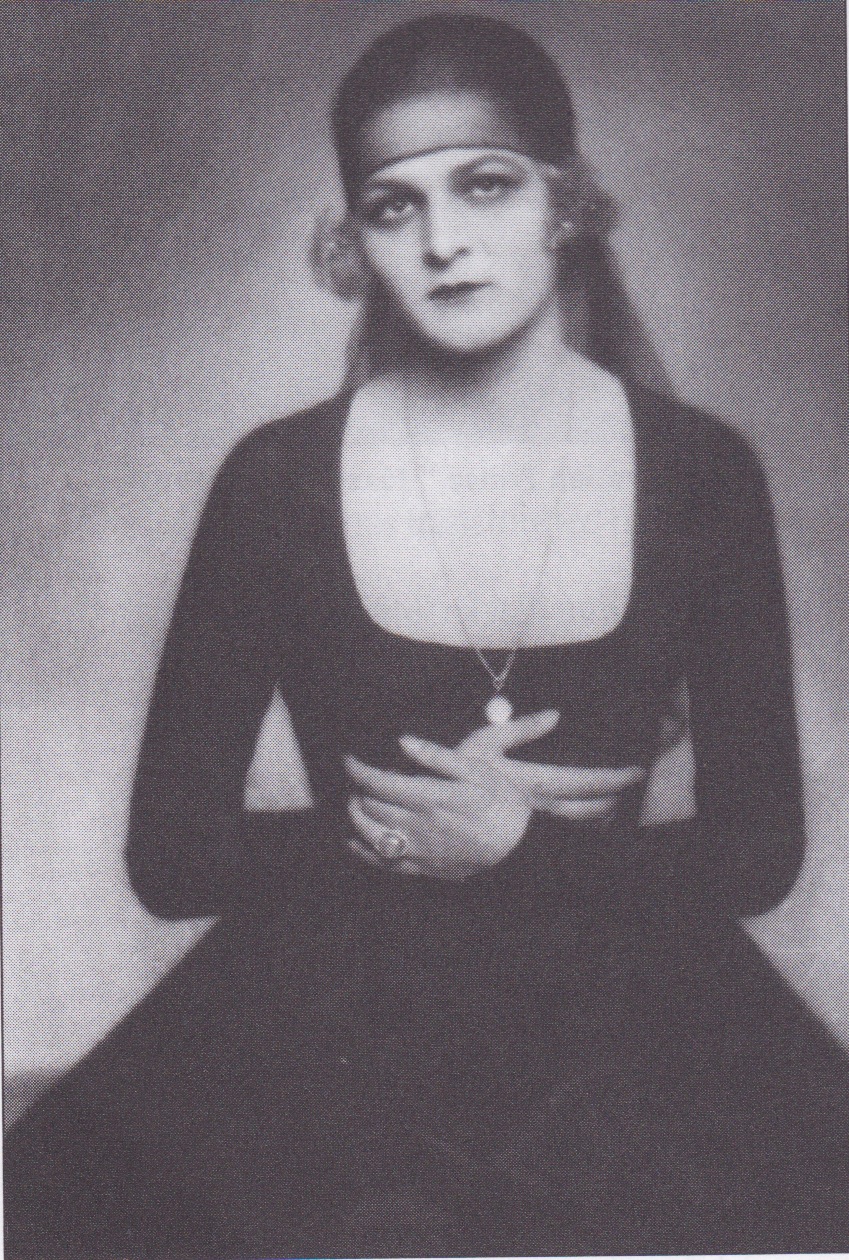
Anita Berber (10 June 1899 – 10 November 1928) the greatest Expressionist dancer the world has ever see and an amazing actress who worked with Fritz Land and Conrad Veidt. A real wild child of the Weimar Berlin cabaret scene she lived her life to the full. An emotionally scarred childhood gave her lifelong demons but gave Expressionist dance the greatest exponent it has ever had. Painted by the great Otto Dix, she had a tumultuous love life, copious alcohol and drugs took their toll and she died young and was buried in a pauper’s grave in Berlin at the age of only 29.

anita 8

Posted in Uncategorized | Leave a comment